Friday, February 29, 2008

Thursday, February 28, 2008
3.11 Pickering Biography Sources
Works Cited
Bailey, Solon I. The History and Work of Harvard Observatory, 1839 to 1927. New York: McGraw-Hill, 1931. Internet Archive. 28 Feb. 2008 [http://www.openlibrary.org/details/historyandworkof031439mbp].
Plotkin, Howard. "Edward C. Pickering and the Endowment of Scientific Research in America, 1877-1918." Isis 69 (1978): 44-57. JSTOR. 28 Feb. 2008 [http://links.jstor.org/sici?sici=0021- 1753%28197803%2969%3A1%3C44%3AECPATE%3E2.0.CO%3B2-8].
Tenn, Joseph S. "Edward Charles Pickering." The Bruce Medalists. 11 Feb. 2006. Sonoma State University. 28 Feb. 2008 [http://www.phys-astro.sonoma.edu/BruceMedalists/Pickering/index. html].
3.10 Nebula Videos and Images

The Ant Nebula
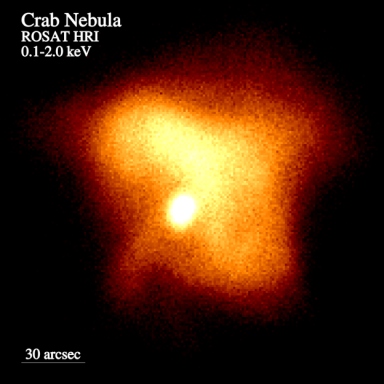
HRI image of Crab Nebula

Hubble Image of Crab Nebula showing Variations in Density
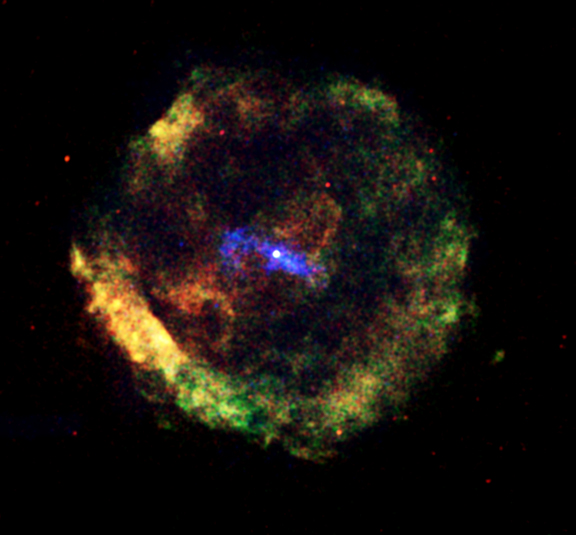
Chandra Image of Cigar Nebula
3.9 Young Stars in the Rho Ophiuchi Cloud
 Taken by the Spitzer Space Telescope, this image shows cosmic dust clouds and embedded newborn stars in false color. This image is part of the Rho Ophiuchi cloud complex some 400 light-years away, one of the closest star forming regions to Earth. The large cloud of cool Hydrogen is heated by these new stars, causing it to glow in the infrared. This image spans about 5 light-years.
Wednesday, February 13, 2008
3.8 Apparent Magnitude Worksheet
Apparent Magnitude Worksheet
- Eta Aurigae 3.5
- Beta Eridani 3.9
- Gamma Orionis 2.4
- Beta Tauri 3.1
- Delta Orionis 2.1
- Zeta Orionis 2.0
- Mu Geminorum 2.8
- Xi Geminorum 3.7
- Sigma Canis Majorum 4.4
- Eta Canis Majorum 1.9
- Alpha Geminorum (Castor) 1.0
Thursday, February 7, 2008
3.7 Light Echoes fro V838 Mon
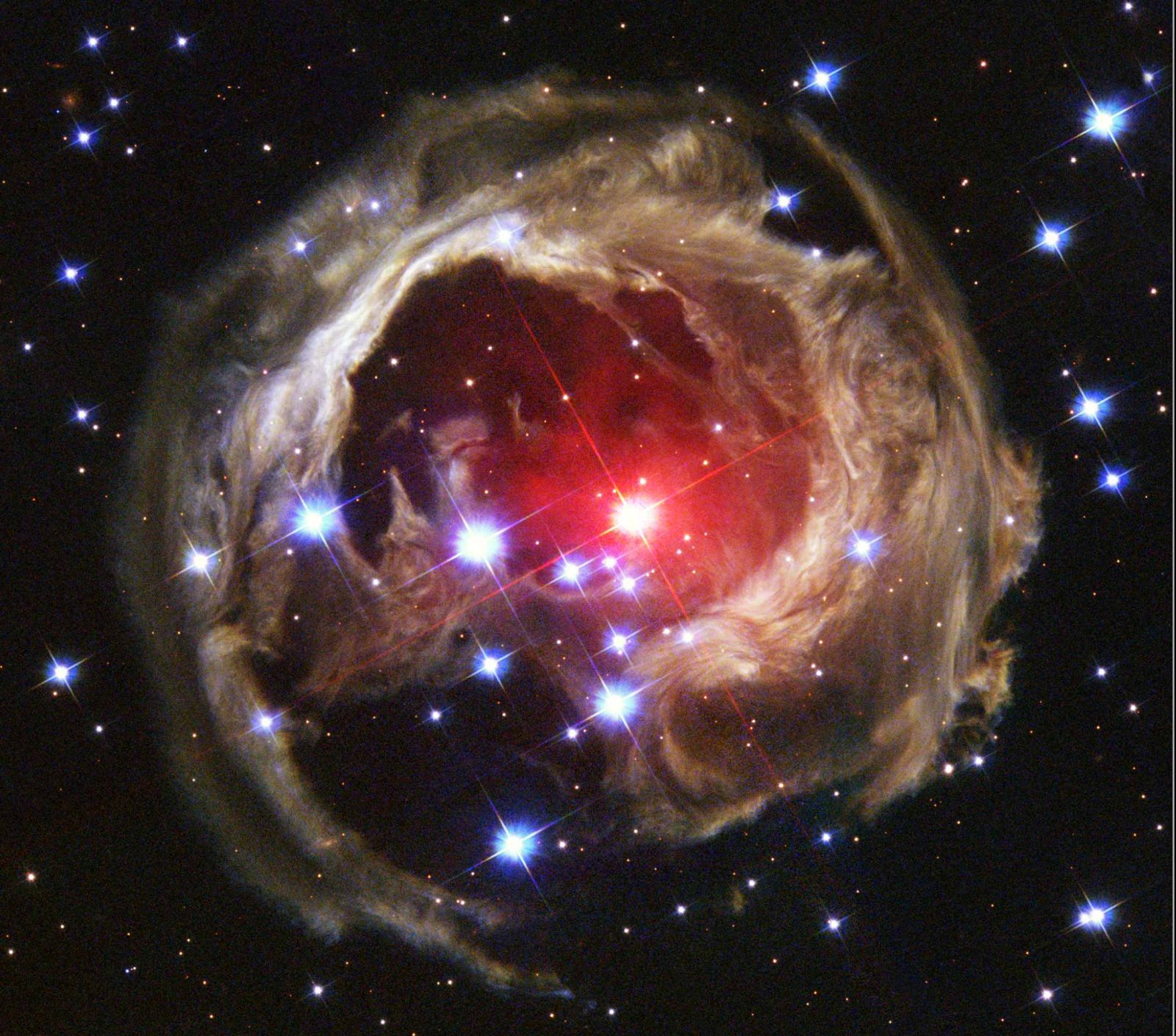 For unknown reasons, the star V838 Mon brightly expanded, making it the greatest star in the Milky Way in 2002, suddenly fading soon after. In this stellar flash, supernovas and novas appeared to expel matter into the universe. However, what actually happened is that this matter formed an outwardly moving "light echo." In a light echo, light from the flash is reflected by successively more distant rings of interstellar dust that already surrounded the star. V8383 Mon is about 20,000 light-years away in the constellation Monoceros.
Saturday, February 2, 2008
3.6 Observation Log
Date: February 01, 2008
Time: 7:30-9:30
Location: 270 15' 29.35" N, 820 23' 44.36" W; My Home
Sky Conditions: Very clear and great visibility. Considerable light pollution in NW (from Sarasota)
Instruments: None
Planets: Mars
Bright Stars Noted: Sirius, Rigel, Betelgeuse, Pollux, Castor, Capella, Aldebaran, Achernar, Algol, Arneb, Procyon
Constellations Noted: Lepus, Columba, Canis Major, Gemini, Orion, Monoceros, Eridanus (I only traced part of it as I lost sight of the rest), Taurus, Perseus, Cassiopeia, Camelopardalis (only two stars visible), Aries, Auriga, Canis Minor
Binary Stars: Rigel, Capella, Algol (However, could not distinguish separate stars as no instruments were used)
Deep Sky Objects: Hyades, Pleiades
Asterisms: The Three Kids (Auriga), Orion's Belt & Orion's Sword (Orion), The Worm (Cassiopeia)
Subscribe to:
Posts (Atom)